Kilroy Was Here (1983) shifts Styx’s acoustic footprint into a sleeker, synthetic 1980s pop-rock landscape, defined by punchy digital-era polish, high-frequency sheen, and a heavily engineered stereo image. Produced by the band, the album trades the warm, wide-open analog space of their earlier 1970s work for a tighter, highly controlled sonic presentation centered around cutting-edge synthesizer technology. Dennis DeYoung’s key arrangements dominate the mid-and-high frequencies with glossy synth patches, sequenced basslines, and bright, metallic Vocoder effects—most famously on "Mr. Roboto." The twin-guitar attack of Tommy Shaw and James "JY" Young is framed with razor-sharp precision: crisp, chorus-drenched rhythm tracks and searing, mid-range-focused lead fills cut cleanly through the dense synth beds without crowding the center channel. The vocal production is exceptionally polished, featuring dry, forward-placed lead lines flanked by immaculate, multi-tracked vocal harmonies with crystal-clear high-end detail. Beneath the synth-heavy layers, Chuck Panozzo’s bass delivers a tight, rounded low end, while John Panozzo’s drums exhibit snappy, gated snare transients and precise, dry cymbal decay, resulting in a punchy, theatrical, and distinctly futuristic production.
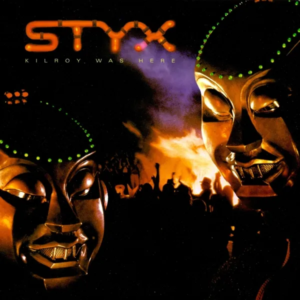
Kilroy Was Here (1983) shifts Styx’s acoustic footprint into a sleeker, synthetic 1980s pop-rock landscape, defined by punchy digital-era polish, high-frequency sheen, and a heavily engineered stereo image. Produced by the band, the album trades the warm, wide-open analog space of their earlier 1970s work for a tighter, highly controlled sonic presentation centered around cutting-edge synthesizer technology. Dennis DeYoung’s key arrangements dominate the mid-and-high frequencies with glossy synth patches, sequenced basslines, and bright, metallic Vocoder effects—most famously on "Mr. Roboto." The twin-guitar attack of Tommy Shaw and James "JY" Young is framed with razor-sharp precision: crisp, chorus-drenched rhythm tracks and searing, mid-range-focused lead fills cut cleanly through the dense synth beds without crowding the center channel. The vocal production is exceptionally polished, featuring dry, forward-placed lead lines flanked by immaculate, multi-tracked vocal harmonies with crystal-clear high-end detail. Beneath the synth-heavy layers, Chuck Panozzo’s bass delivers a tight, rounded low end, while John Panozzo’s drums exhibit snappy, gated snare transients and precise, dry cymbal decay, resulting in a punchy, theatrical, and distinctly futuristic production.