Carlo Maria Giulini’s classic 1864 Philharmonia Orchestra recording of Verdi’s Messa da Requiem is a monumental, deeply spiritual performance that balances explosive dramatic terror with sublime, sacred intimacy. The soundscape is defined by Giulini’s unhurried, noble tempos, allowing the lush EMI analog production to breathe with immense hall depth and dynamic scale. In terrifying, apocalyptic passages like the iconic "Dies Irae," crashing bass drums, fiery brass fanfares, and thunderous choral swells strike with visceral physical impact. Yet, the recording's true magic lies in its hushed, meditative moments—where the Philharmonia’s silky string textures and a legendary vocal quartet (Elisabeth Schwarzkopf, Christa Ludwig, Nicolai Gedda, and Nicolai Ghiaurov) weave radiant, vocal-driven harmonies that hover with breathtaking serenity in a wide, natural concert hall acoustic.
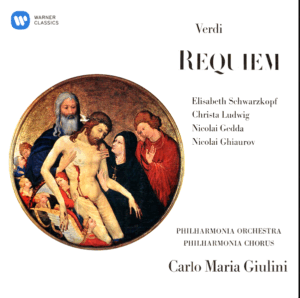
Carlo Maria Giulini’s classic 1864 Philharmonia Orchestra recording of Verdi’s Messa da Requiem is a monumental, deeply spiritual performance that balances explosive dramatic terror with sublime, sacred intimacy. The soundscape is defined by Giulini’s unhurried, noble tempos, allowing the lush EMI analog production to breathe with immense hall depth and dynamic scale. In terrifying, apocalyptic passages like the iconic "Dies Irae," crashing bass drums, fiery brass fanfares, and thunderous choral swells strike with visceral physical impact. Yet, the recording's true magic lies in its hushed, meditative moments—where the Philharmonia’s silky string textures and a legendary vocal quartet (Elisabeth Schwarzkopf, Christa Ludwig, Nicolai Gedda, and Nicolai Ghiaurov) weave radiant, vocal-driven harmonies that hover with breathtaking serenity in a wide, natural concert hall acoustic.