More (1969) by Pink Floyd—the soundtrack to Barbet Schroeder’s film—is an eclectic, highly experimental, and sun-drenched bridge in the band's catalog, blending pastoral folk-rock with blistering, primitive hard rock. Driven by David Gilmour’s emerging vocal prominence and raw guitar work, the album shifts dramatically between fragile, acoustic reveries and heavy, feedback-fueled proto-metal workouts like "The Nile Song" and "I've Got a Feeling." Richard Wright’s Farfisa organ and Hammond keys alternate between warm, pastoral textures and eerie, avant-garde drone soundscapes, while Nick Mason’s understated percussion and Roger Waters’ pulsing basslines keep the acoustic tracks grounded in an intimate, seaside atmosphere. Recorded quickly at Abbey Road, the production carries an unpolished, cinematic warmth—filled with natural tape room reverb, birdsong sound effects, and loose, free-form instrumental jams that capture the band pushing their experimental boundaries in a stripped-down setting.
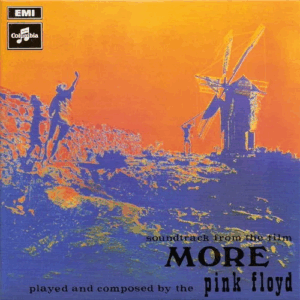
More (1969) by Pink Floyd—the soundtrack to Barbet Schroeder’s film—is an eclectic, highly experimental, and sun-drenched bridge in the band's catalog, blending pastoral folk-rock with blistering, primitive hard rock. Driven by David Gilmour’s emerging vocal prominence and raw guitar work, the album shifts dramatically between fragile, acoustic reveries and heavy, feedback-fueled proto-metal workouts like "The Nile Song" and "I've Got a Feeling." Richard Wright’s Farfisa organ and Hammond keys alternate between warm, pastoral textures and eerie, avant-garde drone soundscapes, while Nick Mason’s understated percussion and Roger Waters’ pulsing basslines keep the acoustic tracks grounded in an intimate, seaside atmosphere. Recorded quickly at Abbey Road, the production carries an unpolished, cinematic warmth—filled with natural tape room reverb, birdsong sound effects, and loose, free-form instrumental jams that capture the band pushing their experimental boundaries in a stripped-down setting.